
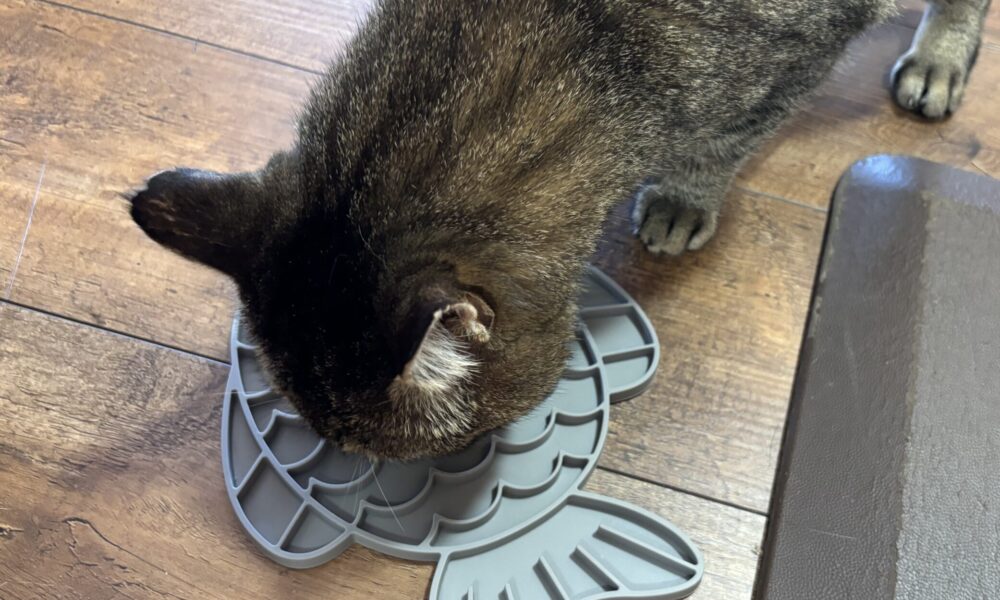
 Miso, a 5 year old NM cat, was diagnosed with chronic pancreatitis when he was 3 years old. Pancreatitis presented as episodes of violent vomiting every 1-2 months. In addition to giving anti-emetics, managing these episodes involved fluid therapy and antibiotics, and the occasional ER visit.
In cats, the common bile duct and the main pancreatic duct join together into a single shared channel before opening into the small intestine. When a cat vomits, the gut contents from the proximal intestine move into the stomach, exposing the pancreas to bacteria and concurrent inflammation on the way (Reference 1).
The overall strategy is to keep Miso from vomiting. We decided to try a schedule of frequent meals combined with environmental enrichment (MEMO) (Reference 2).
MEMO stands for Multimodal Environmental Modification, a therapeutic framework pioneered by Dr. Tony Buffington of Ohio State University to aid in the treatment of cats suffering from Lower Urinary Tract Syndrome and from “Pandora syndrome”.
MEMO and the vomiting cat – the feeding schedule
Miso is fed both canned and dry food in multiple small meals as recommended for vomiting cats (see Managing the Vomiting Cat – Dietary Strategies). About half his calories come from canned food; the remainder from dry food. He is monitored closely for signs of an impending episode of pancreatitis (, i.e. nausea and vomiting).
| Feeding Schedule | |
|---|---|
| Time | Food |
| 6:00 am | 10 kibbles of dry food |
| 6:30 am | 50% of morning ration of canned food. |
| 7:30 am | 50% of morning ration of canned food. |
| 12:00 pm | 10 kibbles of dry food |
| 6:00 pm | 50 % evening ration of canned food |
| 7:00 pm | 50 % evening ration of canned food |
| 9-10 pm | 20 kibbles of dry food |
MEMO and the vomiting cat – Environmental Modifications
We try to fulfill the physical, nutritional, social and behavioral aspects of MEMO while managing Miso’s pancreatitis.
Physical: In additional to having access to scratching posts and places to rest and hide, Miso takes a morning walk on a leash. The leash is mainly used to keep him from eating grass, which causes him to vomit.
Nutritional: We feed Miso and his roommates their canned meals at individual feeding stations (hard plastic cat carriers) located in the corners of the dining room. The cats are out of sight of each other while being fed. This gives each cat an opportunity to eat their dinner without interference from the other cats.
Social: The cats enjoy daily positive interactions with people in the process of being fed.
Behavioral: The evening meal is fed in two portions: half is fed at the cats’ feeding stations while the human dinner is prepared. The second half of is fed later when we sit down for dinner. The canned food is spread on textured silicone “lick mats”, keeping the cats off the counter and dining table while the humans are having dinner.
The nighttime snack of dry kibbles is fed using food puzzles (foraging behavior) or tossing the kibbles for the cats to chase and “hunt down”.
This routine may seem complicated but actually works quite well. Canned meals sandwich the morning routine of breakfast and getting ready to go out for the morning. Canned meals sandwich the evening routine of preparing then serving dinner. The bedtime routine tells everyone to prepare for a good night’s sleep.
Memo and the vomiting cat
Feeding small frequent meals helps manage Miso’s chronic pancreatitis. It is more work compared to ad lib feeding of dry food but it is worth the reduction in the severity and frequency of Miso’s vomiting episodes. After implementing this regimen, a bout of pancreatitis occurs every 2-3 months and only requires only a few days of oral medication with minimal vomiting, no ER visit and often no fluid therapy.
The silver lining: The cats seem to enjoy eating more often and it is can be fun to watch them work the food puzzles or to toss them kibbles. The four cats even seem to get along better together!
references
- Batchelor DJ, Devauchelle P, Elliott J, et al. “Mechanisms, causes, investigation and management of vomiting disorders in cats: a literature review”. Journal of Feline Medicine and Surgery. 2013;15(4):237-265. doi:10.1177/1098612X12473466
- Herron ME, Buffington CA. “Environmental enrichment for indoor cats”. Compend Contin Educ Vet. 2010 Dec;32(12):E4. PMID: 21882164; PMCID: PMC3922041.