
You did it! You are adopting a cat from the local animal shelter. You’ve bought litter boxes, a soft bed for kitty to sleep in, food and water dishes, and a really cute cat tree. You’re ready – or are you?
From Shelter Cat to House Cat
Imagine being a shelter cat:
“You may have been living in a big field in the country or in an alley in the city and caught in a trap. Or a kind person coaxed you into a carrier with chunks of tuna and brought you to the animal shelter. You are placed in a cage where you can smell and see other cats in cages. But you are fed tasty cat food and have crunchy food to snack on. You have gotten used to living in the shelter – you know the space and the routine.”
When you bring your new feline companion home, they have no idea what is going to happen. You are taking them away from a place that they are familiar with and bringing them to somewhere unknown. Kitty’s first inclination in their new home may be to hide. Here are some ways to ease that transition from shelter cat to house cat.
A Safe place
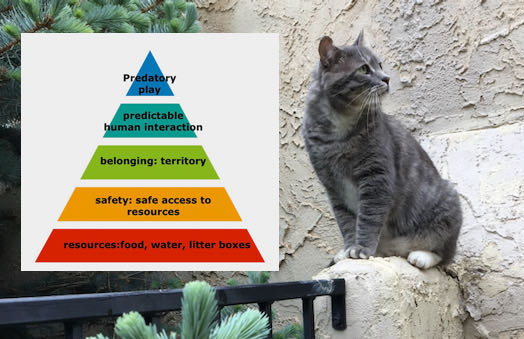
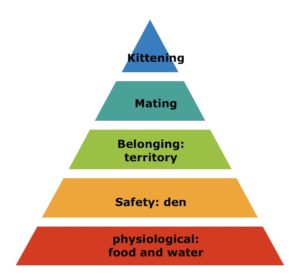
Cats not only need food, litter boxes and a place to sleep, they also need to feel SAFE to use these resources
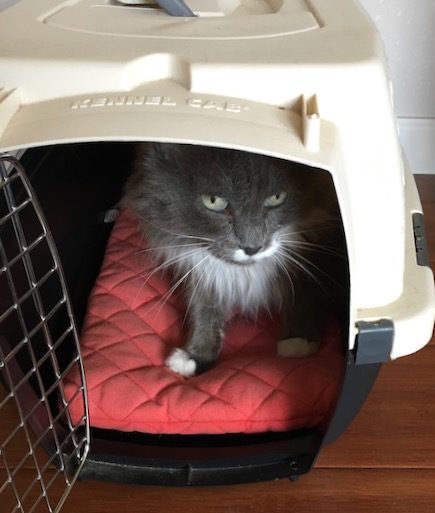
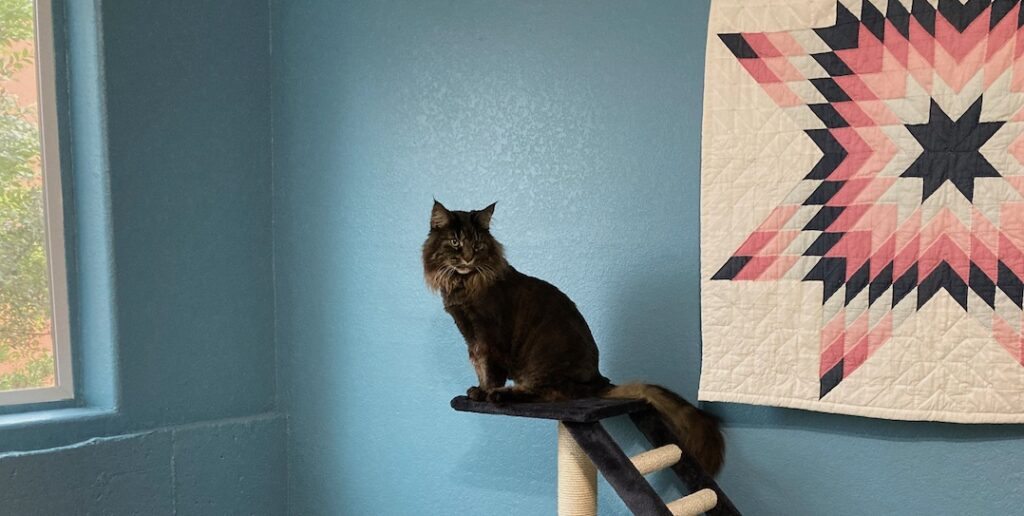
Establish a “safe place” for your new feline friend. Choose a room with a door you can close, block off places where your cat can hide (under the bed, behind a bookcase) and you can’t get them. Put all those things you bought – food, litter box, water and cat tree- in that room. Make sure to provide Kitty a hiding place that you can access if needed – a box or cat carrier can work. The “safe place” gives the new cat a base from which to mount explorations of their new home.
A lot of cat communication is by smell.
- consider using a pheromone diffuser in the “safe place” to convey messages of calmness and security.
- ask the animal shelter if you can have a towel or blanket the cat was using in their kennel OR spray a fleece blanket with a pheromone spray before placing it in the box or carrier.
Cats are individuals – some may be ready to explore their new surroundings right away while others take longer. But even outgoing cats need to spend some time alone. A “safe place” allows the new cat some alone time, time to process the environmental and social changes they are experiencing.
BE PREDICTABLE!
Remember that your new friend may be scared in your home at first. Let them settle in the safe place first. Visit them in the “room of their own” – sit on the floor and see if they come over to greet you for some petting or brushing.
Be predictable – approach your cat in the same way each time. This will help your cat become accustomed to you. Approach Kitty from the side instead of head-on: this is less scary for the cat. Make your visits positive to your new cat – try offering a play session and some snacks!
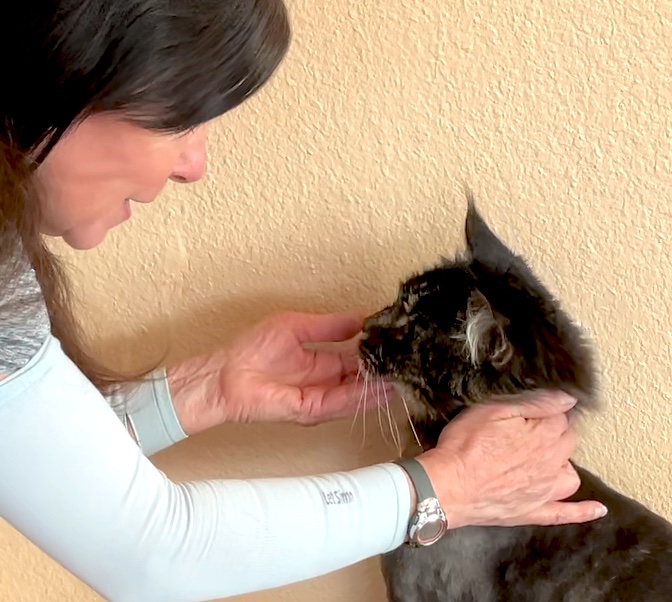
If Kitty remains in the box or carrier and does not approach you, try a snack or a toy to coax them to come out. Be patient and wait for them to come to you. Avoid having your hand over their head at first – this can startle or scare them. Instead, use a spoon to offer a snack to the cat and see if you can stroke their cheeks while they lick the treat.
From shelter cat to house cat – take your time
A gradual introduction to the new home and people is best for most cats. Pay attention to your cat’s body language – if they seem scared or frightened, allow them to stay in the “safe room”. The time invested in respecting Kitty’s emotional state will build trust.
Gradual, structured introductions to people and other pets work best. At first, bring people in to see Kitty. Go slowly and watch Kitty’s body language to see if the encounter is going well. Wait a few weeks before introducing other pets.
Transitioning from shelter cat to house cat is stressful for many cats. Be patient and respect their emotional state. Set up a “safe place” in your home where they can retreat to in times of stress . Be the predictable human in your cat’s life and take your time introducing your new cat to people and other pets.
references
- Meyer, Phyllis. “What Do Cats Need?”, The Feline Purrspective, 02/17/2024. https://www.felinepurrspective.com/what-do-cats-need/
- Meyer, Phyllis. “Introducing Cats: A Short Guide”, The Feline Purrspective, 07/10/2022, https://www.felinepurrspective.com/introducing-cats-a-short-guide/
- Battersea Dogs and Cats Home, “How to Interact with Your Cat/ The Battersea Way”, 03/08/2022, https://youtu.be/UwqG2wLb0KQ?si=-3UwUpg8h5b8v2jR
Want to keep up with the world of cats? Subscribe to The Feline Purrspective!


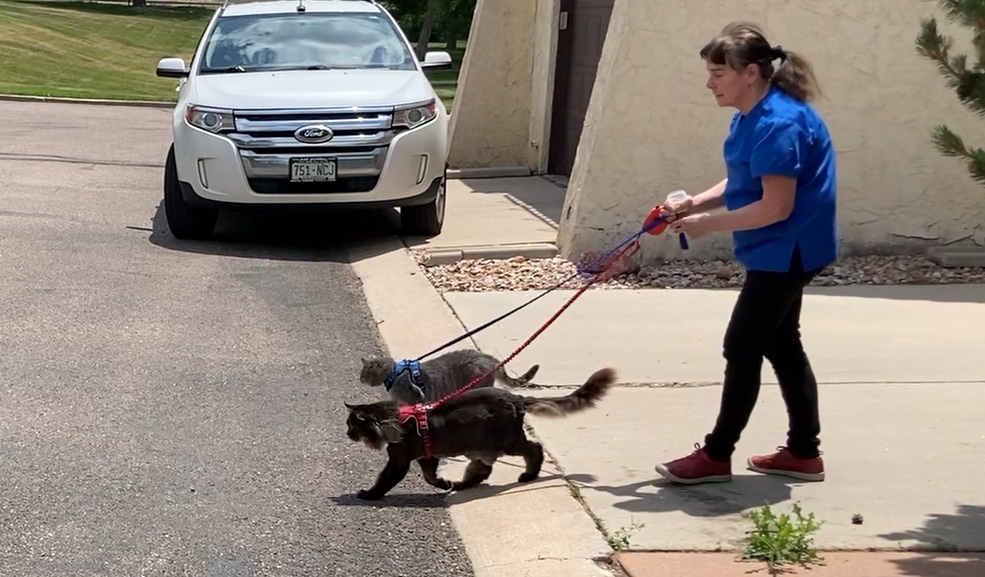
 Indeed, we are more familiar with dogs’ body language than that of cats. People see dogs as more social than cats. Someone getting a puppy will plan to take it places, walk it and play with it.
 Do cats have emotions? Do cats have feelings? Although the words emotions and feelings are often used interchangeably, emotions strictly refer to neurological responses to an event. Feelings on the other hand, are a conscious recognition of these physical sensations; feelings are generated from our thoughts.




 Treating Pandora Syndrome in cats: MEMO