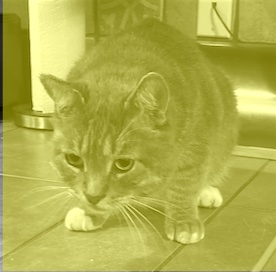
It is a common misconception that it is normal for cats to vomit. The last post investigated dietary and feeding strategies that can help reduce vomiting and make cats more comfortable.

Sometimes, there is an emotional component to gastrointestinal distress. Many of us are familiar with the “butterflies in the stomach” preceding a stressful event. Emotional stress can upset your stomach, and an irritated gut can send distress signals back to your brain (Reference 1). Like people, cats experience anxiety which can affect their GI tract. Here are some tips to help a vomiting cat manage anxiety.

Environmental Tactics to Manage The Vomiting Cat 


MEMO stands for Multimodal Environmental Modification, a therapeutic framework pioneered by Dr. Tony Buffington of Ohio State University to aid in the treatment of cats suffering from Lower Urinary Tract Syndrome and from “Pandora syndrome”.

Pandora syndrome refers to cats suffering from multiple medical ailments that do not resolve with appropriate medical treatment. Instead, the symptoms are chronic, waxing and waning in response to environmental stressors (see Reference 2).

MEMO addresses the environmental needs of cats, dividing these into five categories (Reference 3).

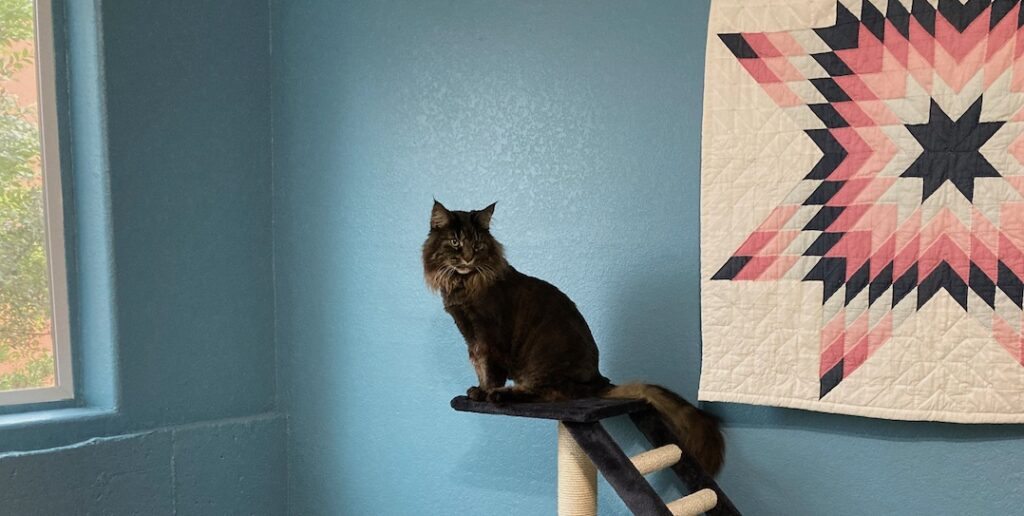
  • physical resources – elevated perches, multiple scratching posts, hiding places
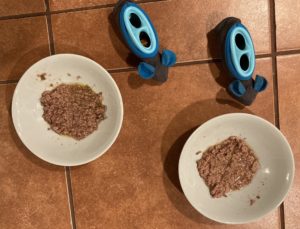
  • nutritional – multiple, separate food and water stations out of sight of other pets
  • elimination – multiple, separate litter boxes in quiet areas
  • social – consistent routines and predictable interactions with humans and other pets
  • behavioral – opportunities for predatory play and foraging for food

Adam Rudinsky, a small animal internal medicine specialist at Ohio State University, recommends implementing MEMO in addition to medical treatment to help cats with chronic vomiting (Reference 3).

Environmental tactics to manage the vomiting cat – Did you get the memo?


Physical Resources

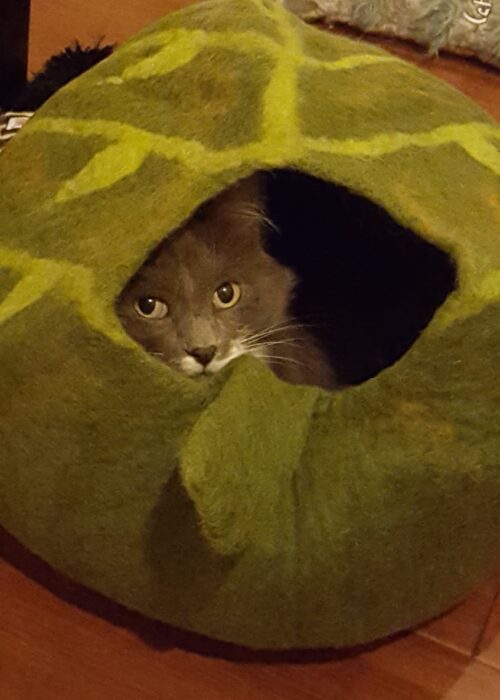
Having quiet places to retreat to can help a cat manage fear, anxiety and stress. Multiple, separate feeding stations, litter boxes and resting places in secluded areas allows a cat to avoid harassment by other pets while eating, eliminating and snoozing. A little “alone time” sometimes works wonders.

Nutritional and Social

Feeding smaller meals more frequently (see “Managing the Vomiting Cat“) means we will be meal feeding our cat, not leaving out a big bowl of kibble for them to graze on. Meal feeding respects the physiology of the cat, who has evolved to eat small prey and has a relatively small stomach. Wild cats typically eat alone and spend most of their waking hours hunting and foraging for food (see “Why Meal Feed your Cat”).

Meal feeding brings social elements into feeding the cat:

  • Predictable human-cat interactions as the human gives the cat food
  • Establishment of routines involving feeding
  • In homes with more than one cat, each cat must feed at their own feeding station. These stations should be separated to keep cats from “stealing” each other’s food and prevent timid cats from gorging, eating their food too quickly and vomiting (see “Why Separate Cats when Feeding“).

Nutritional, Social and Behavioral

Although canned foods provide a more rapid transit through the stomach, dry food can still be part of the vomiting cat’s diet. A fun game to play with your cat is to toss them a meal of dry food. This gives a cat the opportunity to listen for, chase and pounce on their food.

Feeding our cats smaller meals more frequently gives us opportunities to allow the cats to engage in foraging behaviors with food puzzles or timed feeders placed around the house. Food puzzles can accommodate both canned and dry foods (see “Cats at Work: Using Food Puzzles“).

MEMO and the Cat with Hairballs

Cats that live indoors have a lot more time on their paws than their outdoor counterparts. Indoor cats tend to spend more time grooming and ingesting fur. MEMO can help reduce stress and boredom that  gives rise to excessive grooming in house cats and the accompanying hairballs.

Vomiting is commonly reported by feline caregivers. Per AI generated searches, it is considered normal for cats to vomit once or twice a month. Such vomiting is not “harmless” and steps should be taken to find the medical cause. Even if there is a clear medical cause, treatment can include dietary and environmental tactics to manage the vomiting cat, giving them a better quality of life.

references

  1.  “The Gut-Brain Connection”, July 18,2023. Harvard Health Publishing.  https://www.health.harvard.edu/diseases-and-conditions/the-gut-brain-connection.  Viewed 8/8/2026.
  2. Meyer, Phyllis. “Treating Pandora Syndrome in Cats: The environment”, January 14, 2024. https://www.felinepurrspective.com/treating-pandora-syndrome-in-cats-the-environment/
  3. Herron ME, Buffington CA. “Environmental enrichment for indoor cats”. Compend Contin Educ Vet. 2010 Dec;32(12):E4. PMID: 21882164; PMCID: PMC3922041.
  4. Rudinsky, Adam. “Approach to the Vomiting Cat: Causes, Treatment, and Management”. Webinar. https://catvets.com/events/approach-to-the-vomiting-cat-causes-treatment-and-management/

Want to keep up with the world of cats? Subscribe to The Feline Purrspective!
Subscribe

Daily meals for a cat

Vomiting is a common finding when taking a feline medical history. Cat owners seem to accept that all cats vomit and are often not concerned if a cat is vomiting several times a month or weekly. If you do a Google search,“how often do cats vomit” , the AI overview will state something like “It is considered normal for cats to vomit occasionally, typically once or twice a month, often due to hairballs or eating too quickly.” 

Managing the vomiting cat


Per Dr. Adam Rudinsky at Ohio State University, there is “no such thing as harmless vomiting”. There are a number of possible medical causes, ranging from gastritis and food reactions to cancer and kidney disease (Reference 1). But what about the cat who is diagnostically healthy? And is there more (apart from medications and supplements) we can do to manage those cats that vomit regularly due to a chronic condition such as Inflammatory Bowel disease?

Coughing or vomiting?


When a cat vomits, the abdominal muscles and diaphragm contract at the same time. The diaphragm moves forward while the abdominal muscles compress the stomach, forcing the contents up and through the esophagus (Reference 2).

The diaphragm and abdominal muscles are also active when a cat coughs but there is no retching and production of stomach contents when a cat coughs. Sometimes violent coughing can result in vomiting.

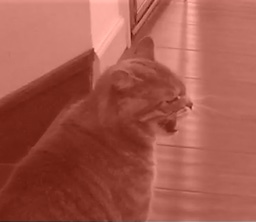
Both vomiting and coughing use the same muscles, hence the confusion that “hairballs are coughed up”. The cat must vomit to expel a hairball – you will see the stomach heaving back and forth in intense, rhythmic contractions that you don’t see in coughing. Many cats will vocalize, lick lips, and drool prior to vomiting.

Dietary tools in Managing the Vomiting Cat


The tools available to the caregiver of a cat prone to vomiting are dietary and behavioral. Let’s first look at how we may modify the cat’s diet.

The vomiting cat’s diet must meet their nutritional needs and also be (Reference 4):

  • Palatable
  • Reduce excess stomach and intestinal secretions
  • Keep food moving through the digestive tract

The diet should be easily digested and contain enough protein to maintain lean body mass. There are veterinary diets that are formulated to be palatable and easily digested.

What form of food?


The form of food (e.g., liquid, canned or dry) affects how quickly the stomach empties. Liquid diets are the fastest to leave the stomach, followed by canned foods and finally dry kibble. One study aimed at determining the optimal time to fast a cat before anesthesia found that some dry kibble could be found in the stomach after an 8 hour fast whereas canned food was gone in less than 4 hours (Reference 3).

Vomiting is associated with fluid loss. Cats with mild fluid deficits can be managed with oral water intake or fluids under the skin. If the cat will eat it, canned food can provide moisture and faster transit through the stomach. If your cat is a confirmed dry food eater, adding some warm water to their dry food can offset some of the fluid loss and improve palatability (Reference 4).

Vomiting may trigger food aversion in some cats. You may want to use a diet made with different ingredients than the regular diet during an episode of vomiting.

Small meals frequently


Consider feeding smaller meals more frequently ( 3-6 meals daily). Smaller meals result in less stomach distention, reduce gastric acid secretion, and transit the stomach faster (Reference 4).

Hairballs


Cats prone to hairballs can benefit from the addition of fiber to their diet to help clearance of swallowed hair. Commercial hairball diets blend insoluble fibers such as cellulose and soluble fibers, typically beet pulp.

Managing the vomiting cat includes several dietary strategies:

  • Adding more canned food in their diet
  • Feeding smaller meals more frequently 
  • Feeding a diet with fiber added if hairballs are a problem

The type of diet, form of food, or number of meals is often not the full picture. The asocial cat becomes a social eater living in the human home. Next up, behavioral concerns with managing the vomiting cat.

references

  1. Rudinsky, Adam. “YouTube Live: Chronic Vomiting Cats: What Can We Do?”. October 4, 2022. https://www.youtube.com/watch?v=CkZsUYhswGk. Viewed 7/18/26.
  2. Batchelor DJ, Devauchelle P, Elliott J, et al. “Mechanisms, causes, investigation and management of vomiting disorders in cats: a literature review”. Journal of Feline Medicine and Surgery. 2013;15(4):237-265. doi:10.1177/1098612X12473466
  3. Castro, JLC et al. “Determining the Optimal Time of Gastric Emptying in Cats Using Dry or Wet Food”. Acta Scientiae Veterinariae, 2016. 44: 1365. Pub. 1365I. 24June2016
  4. Purina Institute, Centre Square. “Feline Chronic Enteropathy”. https://www.purinainstitute.com/centresquare/therapeutic-nutrition/feline-chronic-enteropathy, viewed 7/14/26.

Want to keep up with the world of cats? Subscribe to The Feline Purrspective!
Subscribe

Acute severe stress triggers the body’s “fight-or-flight response”. Your heart beats faster, your blood pressure increases and you breathe harder. Your muscles become tense, you may feel nauseous. Wild animals can actually die of stress during capture and relocation as a result of a condition known as “capture myopathy”. Muscles are damaged as the animal struggles to escape; the damaged muscle releases toxic substances into the bloodstream, causing kidney failure, high temperatures and sometimes death or a subsequent deterioration in health (Reference 1).

While few cats have been documented as suffering from “capture myopathy”, restraining a struggling, terrified cat for a procedure at the vet clinic has a potential to cause physical as well as emotional damage.  If pre-visit medications aren’t enough, the cat owner has a choice: fear or sedation at the vet?

Fear or sedation at the vet?


Sedation can be a gift for a fearful and/or fractious cat. Sedation can (Reference 2):

  • provide comfort and analgesia while reducing anxiety and stress
  • prevent injury to veterinary staff
  • promote a better hospital experience for cats undergoing minor procedures

When properly done, sedation can be a safe procedure for most cats. On the other hand, general anesthesia may be more appropriate for cats with neurological problems, cardiac or respiratory disorders (Reference 2).

sedation vs general anesthesia


Sedation is similar to general anesthesia: the drugs used can cause unconsciousness, amnesia and loss of protective reflexes such as gagging and swallowing (if possible, the cat is fasted prior to the procedure). The risks to the sedated cat are similar to those encountered by the anesthetized cat: the most common issues are cardiovascular and respiratory (Reference 2).  

Sedation is chosen for minor procedures where the cat will be only be under the effects of sedative drugs for a short time. A cat may be sedated to acquire blood and urine samples, have x-rays of painful limbs, or have an abscess flushed and stitched up. In such brief procedures, typically an airway is not established with an endotracheal tube nor is an intravenous catheter placed. The goal is to finish the necessary tasks and wake the cat up, returning them to a normal physiologic state as soon as possible.

Good practice dictates that the veterinary team be prepared to transition to general anesthesia if necessary, providing oxygen, intubating the cat and placing an intravenous catheter for fluid therapy if needed.

Monitoring (Reference 2) during sedation is not as comprehensive as that of general anesthesia due to time constraints. An abbreviated protocol follows the cat’s physiologic status.

  • monitor depth of sedation – eye blink reflex
  • measuring oxygen saturation in the blood (pulse oximetry)
  • measuring pulse rate and blood pressure

Comfort and Pain Relief


Sedation protocols for cats are typically a combination of a pain medication (usually an opioid) and a sedative. The combination of the two drugs produces a greater sedative effect compared with either drug given alone. Lower doses of the drugs can be used when they are given together (Reference 2), reducing adverse cardiac and respiratory side effects.

The drugs can given intramuscularly (IM) or intravenously (IV) depending on the drug combination. IM protocols are popular because is often easier to give a frightened, struggling cat an injection in the muscle compared with trying to inject drugs in a vein.

Pre-visit medications can be an adjunct to the sedation procedure, reducing the dose of sedative drugs needed and making administration of these drugs less stressful.

recovery


A warm, dark, quiet area allows cats waking up from sedation or anesthesia to be monitored to ensure a smooth recovery. Additional pain medication may be administered and food may be offered if appropriate.

returning home


  • Watch your cat closely once they are home. Consider confining them to a room with all their resources so that they can safely settle back into the home environment and routine. Be sure to check in on them until the effects of the sedative drugs have worn off.
  • Cats identify each other by smell. In multi-cat homes, a cat returning from the vet clinic has picked up the smell of the hospital and may be “shunned” by their housemates. Keeping the returning cat separate from their housemates followed by a reintroduction is appropriate here.
  • See “Aggression Between Cats After a Vet Visit”


The choice: Fear or Sedation at the Vet?
In cats with fractious temperaments or showing fearful behavior, sedation can replace moments of sheer terror with a better hospital experience. Gone is the struggle, muscle tension, and fear associated with full-body restraint. The gift of sedation can help cats live longer and healthier lives due to better veterinary care.

references

  1. Breed D, Meyer LCR, Steyl JCA, Goddard A, Burroughs R, Kohn TA. Conserving wildlife in a changing world: Understanding capture myopathy-a malignant outcome of stress during capture and translocation. Conserv Physiol. 2019 Jul 5;7(1):coz027. doi: 10.1093/conphys/coz027. PMID: 31304016; PMCID: PMC6612673.
  2. Simon BT, Steagall PV. Feline procedural sedation and analgesia: When, why and how. J Feline Med Surg. 2020 Nov;22(11):1029-1045. doi: 10.1177/1098612X20965830. PMID: 33100168; PMCID: PMC10814218.

Want to keep up with the world of cats? Subscribe to The Feline Purrspective!
Subscribe

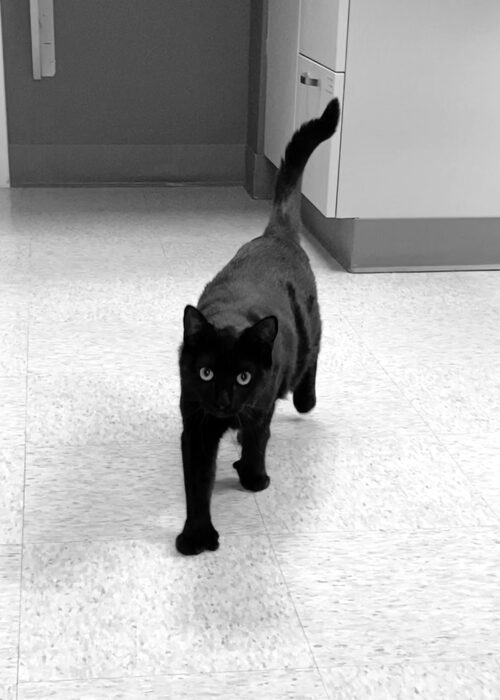
A relaxed, calm cat approaches a veterinary staff member.

Veterinary medicine has markedly improved for companion animals – we recognize that cats and dogs experience pain and suffering, which in turn affects their quality of life. Routine checkups, vaccinations,  and dental cleanings reduce disease and improve the health and welfare of our pets.

Cats are becoming members of the family and not just valued mousers.  There is a trend away from brute force handling of cats to “get it (blood sample, vaccination) done” to trying to make the vet visit better for cats, avoiding fear and arousal as much as possible.

make the vet visit better for cats


Some of the programs in place to help veterinary staff address the feline patient include:

  • Cat Friendly Practice (Reference 1)
  • Fear Free Program (Reference 2)
  • Low-Stress Handling (Reference 3)

All of these initiatives have the same goal – to deliver medical care to animals without the complications of fear and arousal. We want to avoid the trauma that can result from an unpleasant or frightening event. We want to avoid overwhelming an animal’s ability to cope and triggering survival mechanisms such as fight, freeze or flight.

How can we make the vet visit better for cats? When they arrive at the veterinary clinic, the cat has been taken out of his home environment and transported to a strange place – it smells of other animals, many of whom are afraid; it may be cold and noisy. The cat is most likely scared and anxious, not knowing what will happen next.

How we handle cats in the veterinary hospital has direct consequences on the cat’s welfare. To reduce stress and bad memories, we start with a quiet exam room and an assessment of how kitty is doing today.

the behavior traffic light – Go? Caution? stop!


green – go?

  • The “green” cat is relaxed and may approach veterinary staff.
  • Handling may include petting if the cat solicits it.
  • Exam can be in the cat’s carrier, on the owner’s lap, or wherever the cat is comfortable.
  • Restraint is minimal – handling focuses on stabilizing the cat.
  • Food/toys may be used to distract the cat and keep them happy.

yellow – caution?

  • The “yellow” cat shows early signs of anxiety or fear – they are tense, ears flattened, the tail may be tucked under.
  • Handling may include a towel to give the cat a place to hide and feel more secure.
  • Position or location may change as needed to gain the cat’s cooperation (see “Preparing for the Cat Friendly Exam”).
  • The visit should be prioritized, with the exam number one on the list.
  • Optional procedures like a nail trim may be put off for another day.

Some cats will freeze and seem easy to handle but they are fearful and may “explode” with aggression.

red – stop!

  • A “red” cat may hiss, growl, bite or swat at someone trying to handle them.
  • They actively resist handling.
  • These cats are fearful and defensive and may try to hide.
  • Handling should be stopped immediately to avoid injury to the cat or the handler.
  • If the cat calms down after a break, a limited exam can be attempted.
  • Sedation or anesthesia will be recommended instead of force for urgent procedures.

Can “stop” make the vet visit better for cats?


It is important to realize that the cat learns from traumatic handling. They are likely to repeat the same behavior in a similar situation; they will associate the room, the people, the type of touch with the traumatic experience. STOP” allows us to do a “reset” to that point before things started to go wrong and try to make the vet visit better for cats.

Sedation


Sedative drugs cause a state of calmness or sleepiness. Sedating cats who are fractious or fearful allow us to provide them with pain relief and reduce their anxiety and stress, while performing diagnostics and minor procedures.

In urgent cases, sedation is an option for the “red” cat who does not have a history of health issues, or if a limited exam is possible and does not present any red flags.

In non-urgent situations, the owner may consider trying pre-visit medication for a repeat visit, with the option of sedation if needed. 

What are the risks of sedation? These questions will be answered in the next post.

references

  1. Cat Friendly Practice ® Program. © Copyright 2012 – 2025 International Cat Care and Feline Veterinary Medical Association. https://catvets.com/cat-friendly/cfp/. Viewed 9/2025
  2. Fear Free®. © 2025 Fear Free. All rights reserved. https://www.fearfree.com/. Viewed 9/2025
  3. Dr. Sophia Yin’s Low-Stress Handling. ©2025 Veterinary Information Network. All rights reserved https://cattledogpublishing.com/ Viewed 9/2025


Want to keep up with the world of cats? Subscribe to The Feline Purrspective!
Subscribe