
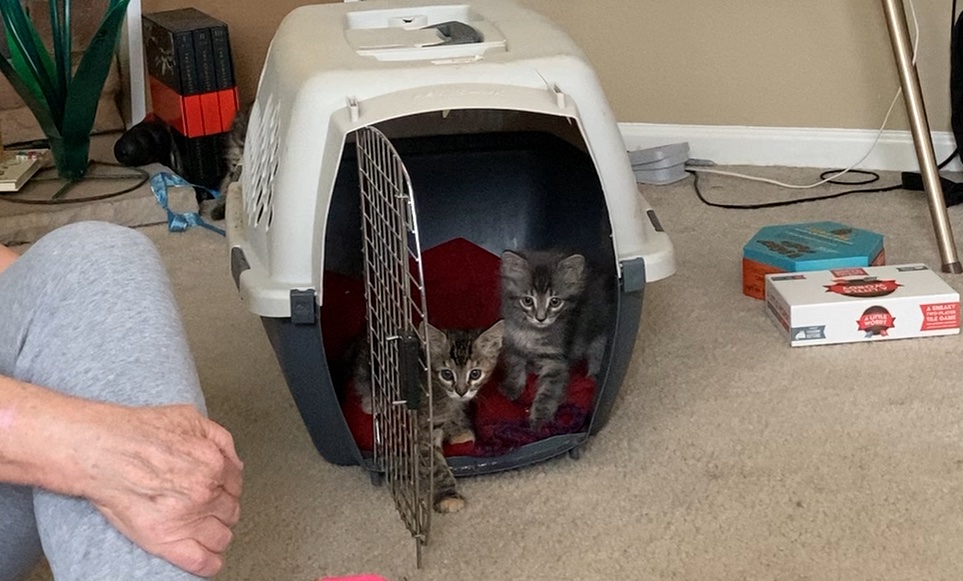
 Kitten kindergarten programs are great ways to continue to expose kittens to new experiences and accustom them to humans. But what if you can’t find one of these programs near you? Consider introducing your kitten to your friends and family in your own home.
Hosting a Meet and greet for your kitten
What you will need:
- An area in your home your kitten is familiar with, large enough to accommodate 3-4 people
- Hiding places for your kitten in the area – some cardboard boxes with holes cut in them can be fun for both your kitten and your guests.
- Treats and toys that your kitten likes
- A litter box
- Plastic spoons for offering treats to the kitten
The Guest list
Expose your kitten to a variety of people – men and women of different ages and well-behaved school-age children. When hosting a Meet and Greet for your kitten, keep the group small, about 3-4 people, but invite different guests each time you do it.
For your first “Meet and Greet”, consider limiting the guest list to adults. Once you are more comfortable, you may include children but start with one child (school age) at first and make sure to supervise directly. Be firm about the rules and how to handle the kitten. Toddlers require a lot of supervision and can hurt a young kitten. They will do better interacting with an older cat.
Let your guests know that the goal of the “Meet and Greet” is to help your kitten learn how to interact with humans. It is important that your kitten has control over his interactions with us so that he develops confidence. Even if he stays in a box or carrier, he has taken the first step to learning more about humans.
The Rules for Meet and Greet Guests
- Allow the kitten to approach you; do not reach for or grab the kitten.
- If the kitten approaches you, offer him a treat in a spoon or a toy to play with. If he seems comfortable, rub his head and cheeks.
- To pick up the kitten up, slide one hand under her chest and use the other hand to support her hind end.
- If the kitten starts to squirm when being held, place him back down on the floor.
- Don’t let the kitten play with your hands or feet – redirect her to a toy.
- Don’t feed the kitten using your fingers (kittens have needle-sharp teeth that can hurt when they bite)
- Do not hand the kitten from person to person.
Setting Up a meet and greet for your kitten
- Have each guest wash his or her hands before the Meet and Greet
- Have everyone watch the Battersea cat handling video (it is about 3 minutes long )
- Review the Rules with the guests.
- Each guest will get a bag with a few treats and can select a toy to play with kitty.
- Have everyone sit down on the floor in a circle.
- Bring out the star of the show in his carrier and sit him next to you.
Activities
 Lure your kitten out with treats or a toy. Allow her to approach people on her own – reward with a treat or play. Guests can take turns luring the kitten with toys, cuddling the kitten (if she accepts this) and offering snacks!
Being picked up can be scary for kittens. If your kitten is calm enough and approaches and greets a guest, the guest may pick him up, reward him with a treat, and see if he’ll sit with the guest. If your kitten gets squirmy, you may need to gently remind your human friend that your kitty friend needs a break!
After about 30 minutes or so, take your kitten to a safe place (another room) for a break and rest.
Treat your guests to pizza and a movie!
LIMIT how much the kitten is fed – the number of treats should not be more than what your kitten eats at a meal.
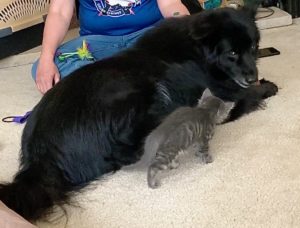
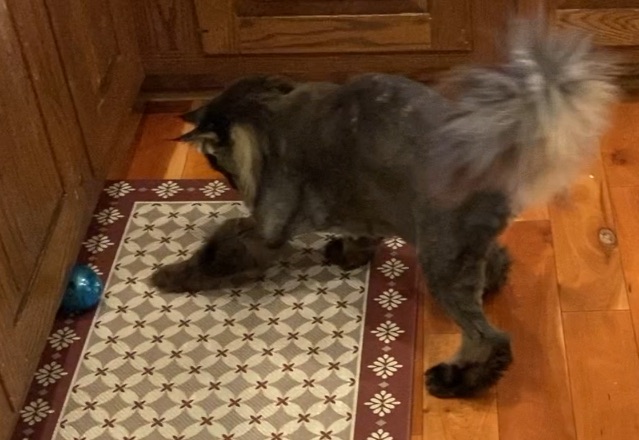
As you get the hang of doing a Meet and Greet for your kitten, you may want to introduce her to well-behaved adult animals. Make sure these adults are vaccinated and dewormed. Choose one pet for the “Meet and Greet”. Start with a barrier like a baby gate between the kitten and the adult animal. Have the pets play and have treats on either side of the barrier. For safety, the adult animal should be harnessed, leashed and have a dedicated handler.
Even if you keep the barrier in place, this is still a valuable experience for your kitten – he will get to see and smell these adult animals up close!
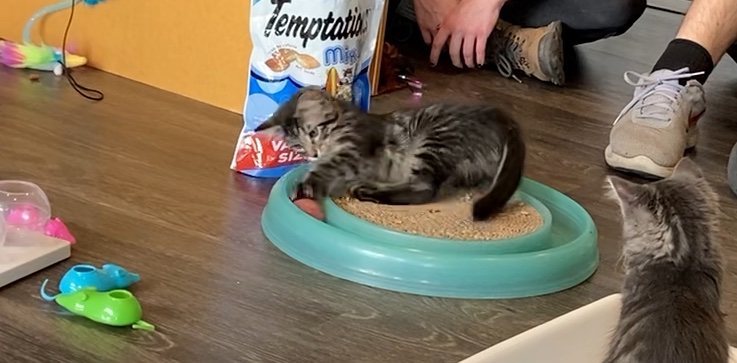
Other kittens around the same age are welcome IF they are vaccinated, dewormed, retrovirus- tested (FeLV/FIV), and are NOT vomiting, having loose stools, coughing or sneezing. Treat them in the same way as the adult animals – apart at first and gradually bring them together.
Hosting a Meet and Greet for your kitten will help her be confident and accept new experiences, for example, having a pet-sitter at her home. She will learn what appropriate handling is and this will contribute to her safety and well-being.
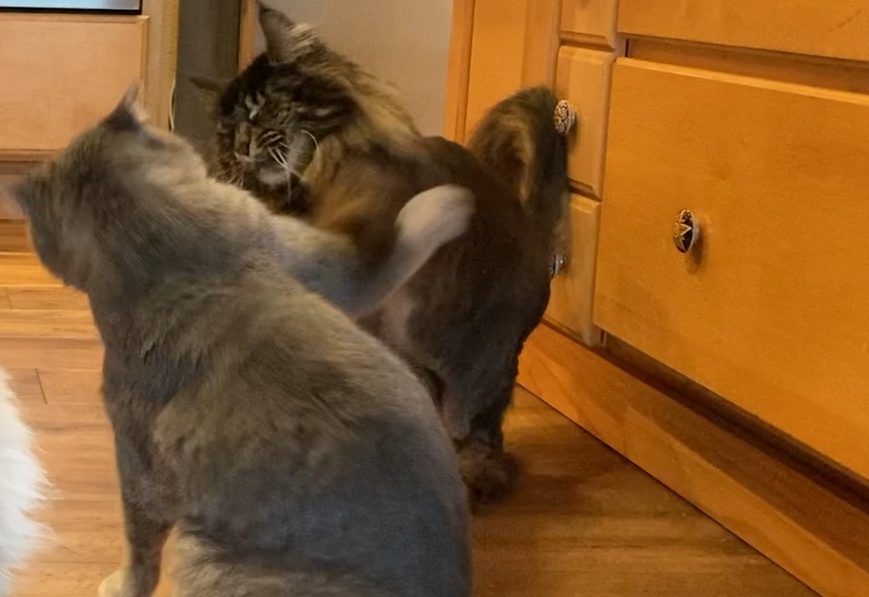


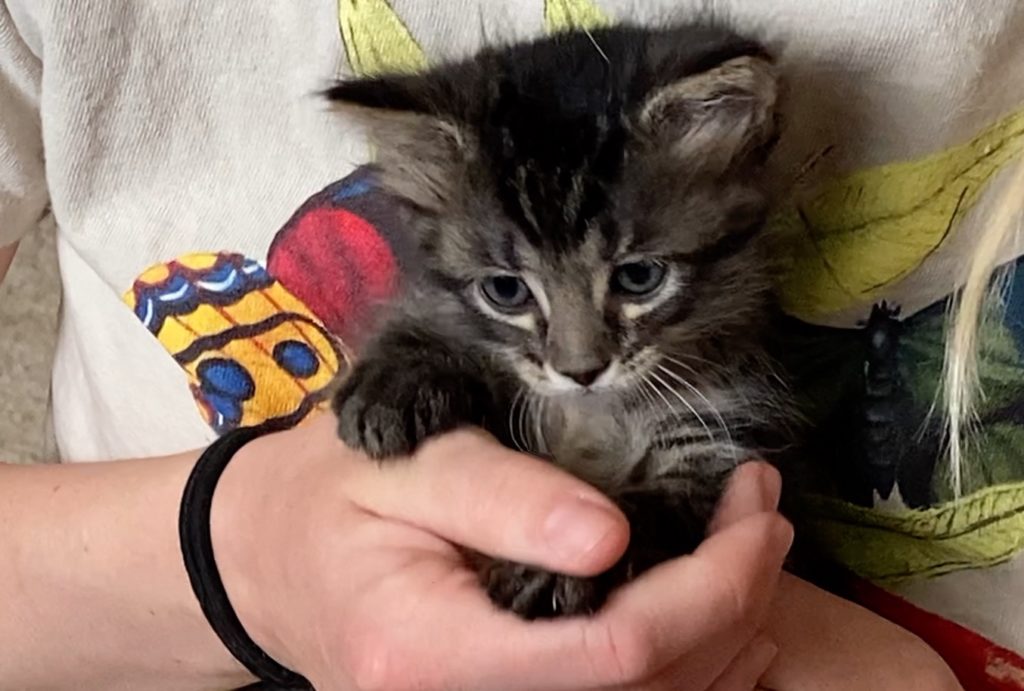
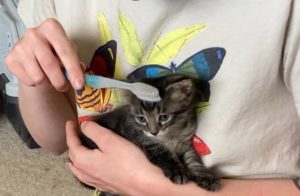
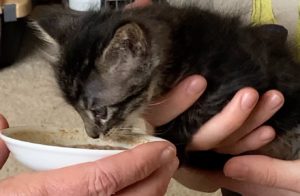 A human caregiver cannot replace a kitten’s mother – after all, we are not cats. For example, how does a human foster mimic the frustration accompanying weaning that encourages the kitten to get his own food? Kittens raised without their mothers and siblings are prone to behavioral issues – they don’t know how to deal with frustration; early separation from the mother may cause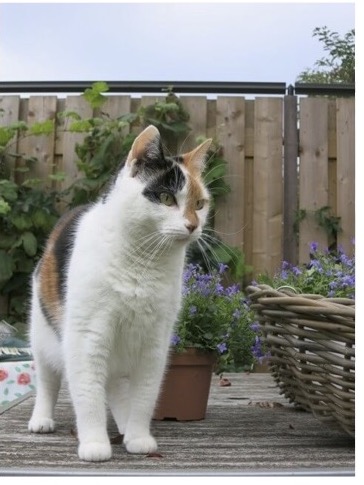

 cat on a morning or afternoon walk in your backyard or neighborhood. After all, getting outdoors is good for us too! It never hurts to have your cat harnessed even in a fenced backyard – this way you can clip the leash on as needed. If you walk your cat in public places, make sure to have kitty in a harness with leash and have a mobile “outdoor safe place” – stroller or backpack – with you.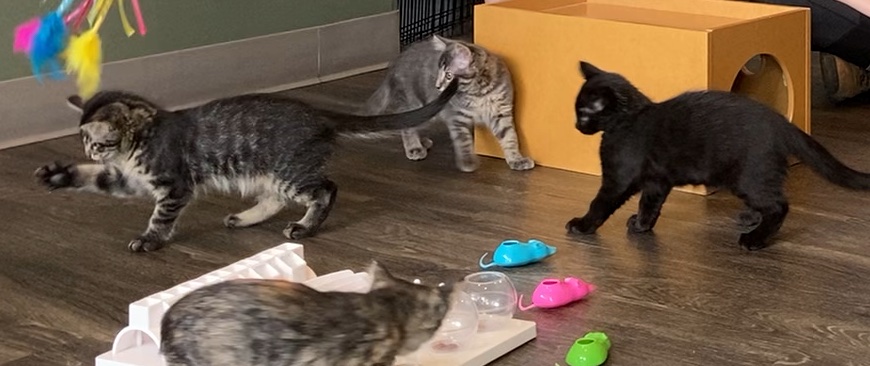
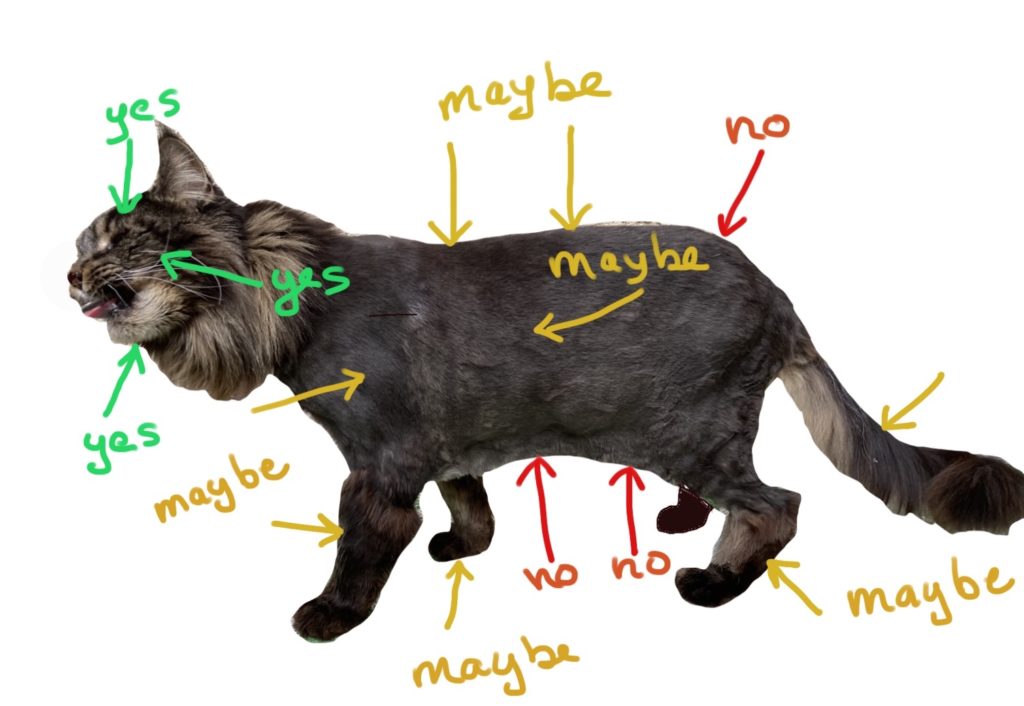


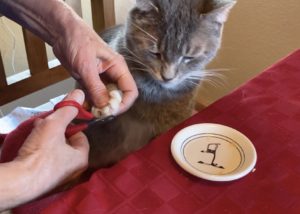

 Follow the CAT guidelines when interacting with cats for a safer, more enjoyable encounter!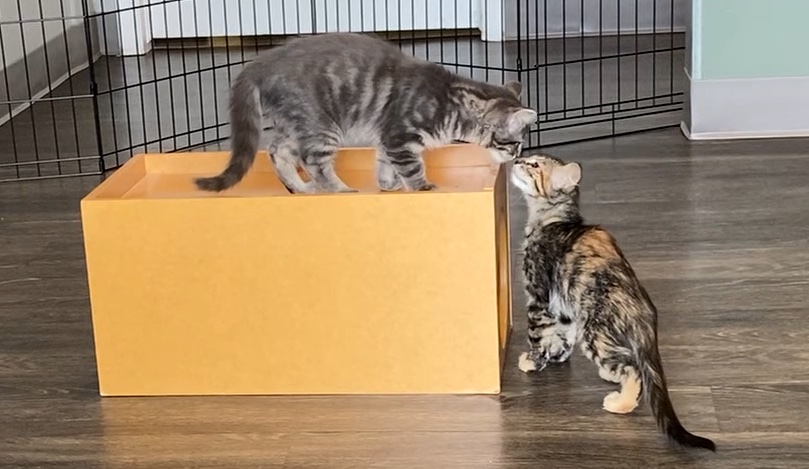

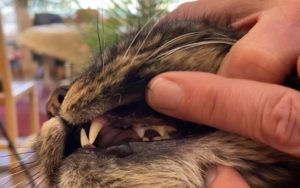 Plaque and tartar tend to accumulate on the buccal (facing the lips) side of the cat’s upper premolars. Focus on these surfaces.
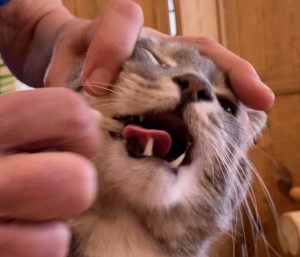 een his ears and your 4th and 5th fingers on his opposite cheekbone. Hold briefly, then reward him with a treat.