
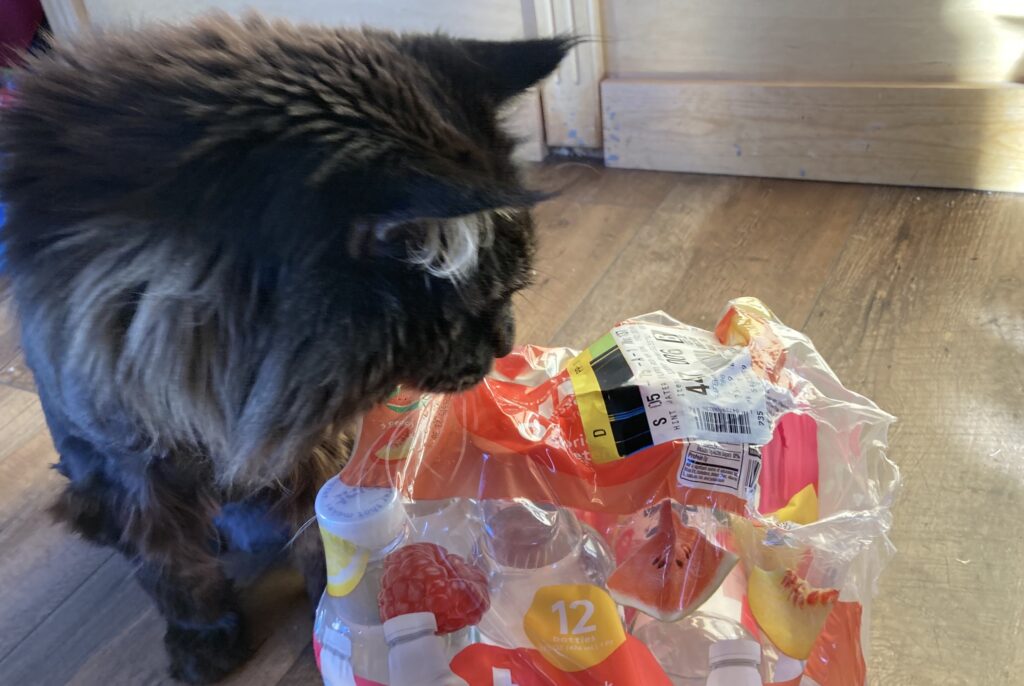
 Have you had or do you have a cat who would eat anything – hair ties, ribbons, plastic – in addition to food? Have you experienced the anxiety waiting for your cat to pass whatever object you think he ate? It is not unheard of for cats to eat, chew or suck on non-food items. This behavior is called pica. How do you manage the cat with pica?
The Bristol Cat Study (Animals 2021, 11(4), 1101; https://doi.org/10.3390/ani11041101) followed a group of cats for a little over 3 years. To participate in the study, the owners had to own a kitten or kittens, 8-16 weeks old at the time of registration.
These owners were asked whether or not their cats chewed (with or without ingesting) one or more of the following items: 1) woolen fabrics 2) other fabrics 3) plastics 4) other materials. These questions were repeated at 2-4 months, 6.5-7 months, 12.5-13 months, and finally at 18.5-19 months. About 25% of 2203 cats were reported to exhibit some pica behavior.
Findings
- plastics were the most commonly targeted material
- pica was most commonly reported at 6.5-7 months of age
- about half of the cats reported to have pica at 6 months did not show pica at 18-19 months of age
- cats who moved to a new house when they were around year old were more likely to have pica
Managing the cat with pica
Pica can result in GI injury, poisoning, or electric shock. The goal of managing pica is to prevent injury to the cat.
Step one: Identify the material being targeted
Yarn? Thread? Hair Ties?
- yarn can wrap around the tongue
- thread may have a sharp needle attached
- hair ties
Poisons?
- Household chemicals: cleaners, antifreeze, insecticides, plant sprays
- House Plants: can be toxic – lilies in particular can cause kidney damage even in small amounts
Other?
- Filmy plastics and things like “fabric softener sheets”
- Chewing/biting electrical cords
- Kneading and sucking on blankets
- Chewing or sucking on toys
Step two: Keep targeted items out of reach of the cat with pica
- keep blankets and other fabrics in closets your cat can’t get into
- put hair ties and elastics away
- replace toys your cat may be eating with ones that he can’t eat
- supervise play times and access to toys
- cover electrical cords with plastic covers that cats can’t bite through
- unplug unused appliances
- discard or hang houseplants
- store household chemicals in a secure closet
Step three: Provide the cat with pica an alternative behavior
We would like to provide Kitty with an outlet for her oral activities and provide something safe for her to interact with.
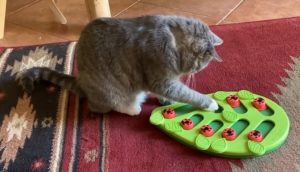 Keeping kitty busy
Try “free feeding” your cat with pica if possible. If “free-feeding” is not an option, frequent small meals will work. Food puzzles offer a natural cat behavior (foraging) as well as a snack. For some ideas, visit foodpuzzlesforcats.com.
Licking – a soothing behavior for cats
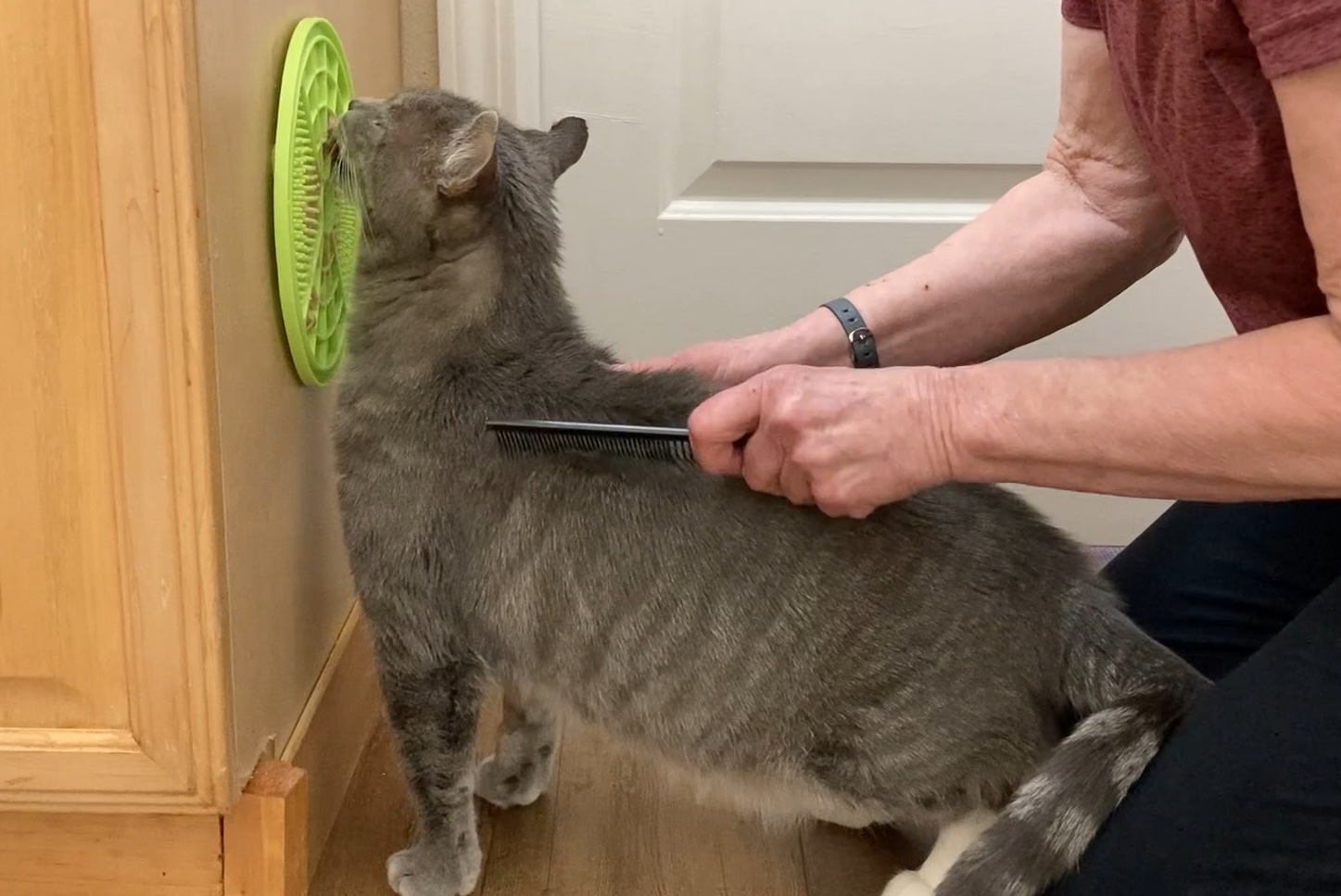
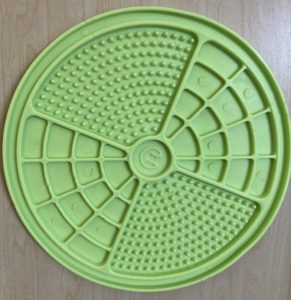
Slow-feeding mats are textured silicone mats that you spread canned food on. The cat licks the food off much like a wild cat may lick meat off a bone. Licking appears to be calming and soothing to cats. Some cats may like licking toys or balls made from compressed catnip.
Chewing
There are silicone toys that can be filled with catnip or silver vine (see the PetZone Boredom Buster dental chew toy). There is also a gum stimulator on the Catit Wellness Center that is designed to be chewed and sucked on. If you try these, be sure to monitor the wear on them and be around to supervise your kitty with these.
Cat Grass
Cats are attracted to grass and like to chew on it. There is the grass sold at pet stores and seeds you can plant. Some varieties of ornamental grasses are non-toxic to cats. Make sure to check the ASPCA site to make sure that the plants you choose are safe.
Step four: reducing stress in the cat with pica
Stress can stimulate an increase in pica behaviors, especially as cats grow out of the kitten stage. Identify and reduce stress whenever possible.
Social stress:
- How does the cat with pica get along with other pets in the household?
- Do neighborhood cats come to the windows?
- Are interactions with humans predictable?
Environmental stress:
- Have things changed in the home – furniture moved? Home remodeling?
- Changes in the scent profile of the home?
Managing the cat with pica can be challenging. Although the Bristol Cat Study indicated that half the cats who had been reported with pica at 6 months were no longer chewing/ingesting things at 18 months, it is wise to monitor your cat for such behavior, even if it seems to have gone away. Providing cats with safe opportunities to lick and chew is key to having a happy and healthy cat.
Your veterinary team is an important resource if you suspect your cat has pica. GI distress, oral pain and neurological issues can sometimes exacerbate pica and are best treated.
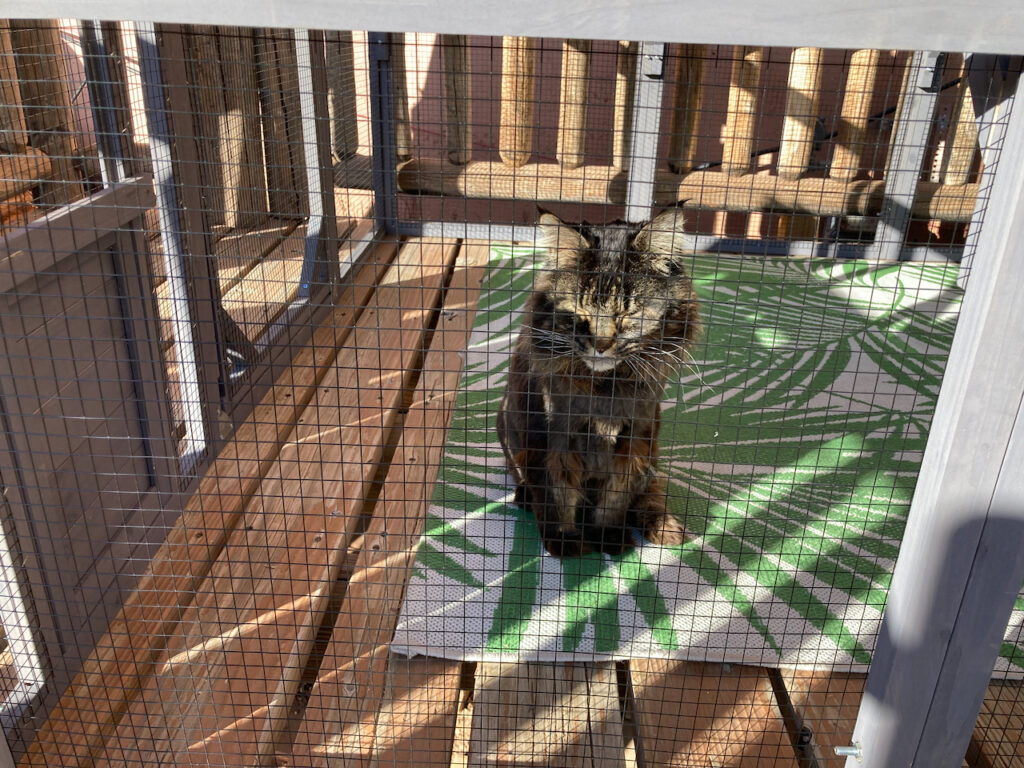 In the U.S., it has become common to keep cats solely indoors. Indoor cats live longer – they are not run over by cars, hunted by coyotes, or injured in cat fights.
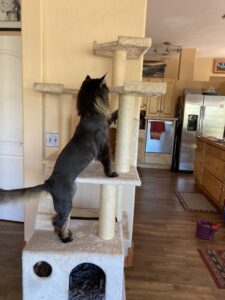 This tall cat tree is located in the interior of the house away from doors and windows. The younger cats (6 years), Zelda and Gus, use this tower to snooze on the upper levels or to get to the tops of the kitchen cabinets. Although it does meet the recommendations for the ideal scratcher, the cats don’t scratch on this tree all that much.
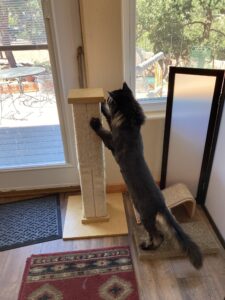 This very tall post (it is 41″) with sisal fabric is at the front door. It is popular with everyone, from the 17 lb Coon cat to the small senior at 8 lb. All four cats scratch before going out for a walk or when they sit to look out the window in the front door. The horizontal cardboard scratchers at the front door also see consistent use. The cats tend to use these with all 4 feet on the scratcher.
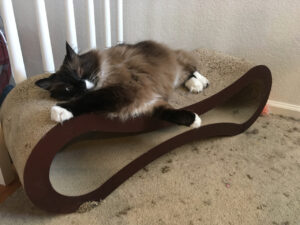
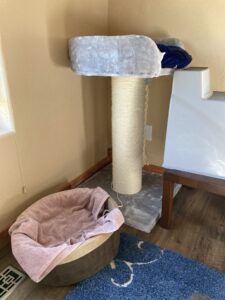 The sisal-covered base of this extra-large cat bed is tall enough for the large Maine Coon to scratch. This cat bed is located in the bedroom. It was purchased for the Maine Coon cat but has been taken over by 8 lb Athena, who sleeps in this bed or in her heated bed at the base of the scratcher. When she gets out of bed, she stretches and scratches on this scratcher. This is used infrequently by the other three cats.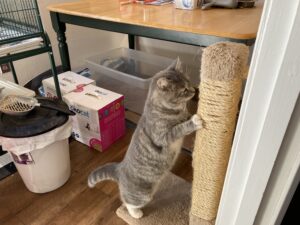

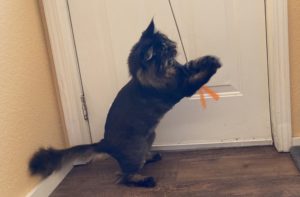

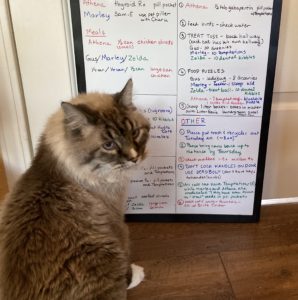
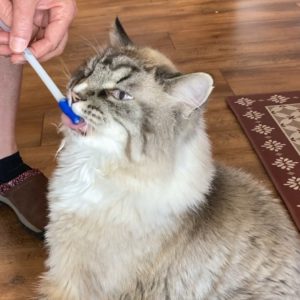 Mix up the routine from time to time – change is part of living. For example, in the medicating routine, you may wish to introduce and practice other ways of offering a pill to your cat – say with a pet piller or offering a “dummy pill” in a squeeze up treat.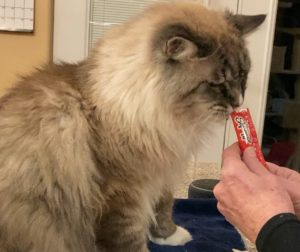
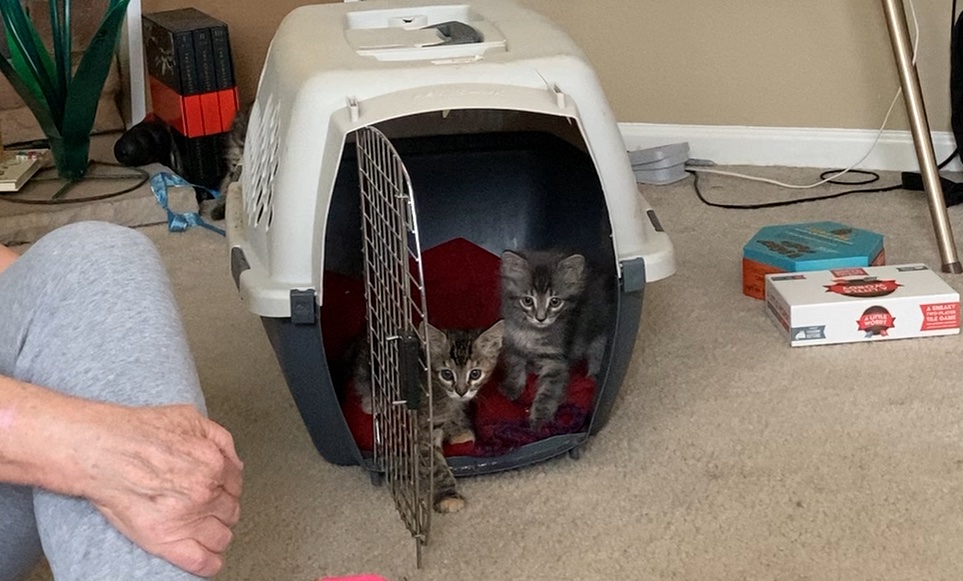 Kitten kindergarten programs are great ways to continue to expose kittens to new experiences and accustom them to humans. But what if you can’t find one of these programs near you? Consider introducing your kitten to your friends and family in your own home.
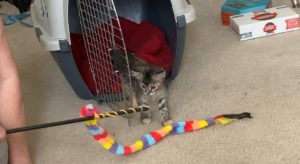 Lure your kitten out with treats or a toy. Allow her to approach people on her own – reward with a treat or play. Guests can take turns luring the kitten with toys, cuddling the kitten (if she accepts this) and offering snacks!
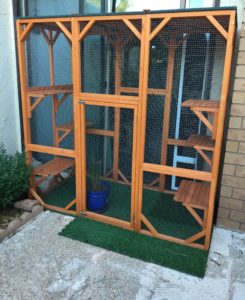
 cat on a morning or afternoon walk in your backyard or neighborhood. After all, getting outdoors is good for us too! It never hurts to have your cat harnessed even in a fenced backyard – this way you can clip the leash on as needed. If you walk your cat in public places, make sure to have kitty in a harness with leash and have a mobile “outdoor safe place” – stroller or backpack – with you.